StorX
  • Storage Systems
    • Pallet Racking Systems
      • Selective Pallet Racking
      • Pushback Rack
      • Pallet Flow Racking
      • Cantilever Racking
      • Bin Shelving
      • Carton Flow and Case Flow Shelving
      • Mezzanine and Work Platforms
      • Very Narrow Aisle Racking (VNA)
      • Rivet Shelving
      • Tire Rack
      • Records Storage Shelving
      • Structural Pallet Racking
      • Used Pallet Racking
      • Double-Deep Pallet Racking
      • Drive-Through Racking
      • Wide Span Shelving
      • Stack Rack
      • Hybrid Pallet Racking
    • Wire Cages and Partitions
    • Industrial Fans
    • Rack Repair Kits
  • Automated Systems
    • Pallet Shuttles
    • Automated Storage & Retrieval Systems (ASRS)
    • Rack Supported Buildings
    • Conveyors & Automation
    • Sortation and Product Movement
    • Automated Packaging & Shipping
  • Industries
    • Cold Storage
    • Third Party Logistics
    • Retail & E-Commerce
    • Food & Beverage
    • Manufacturing & Industrial
    • Warehouse and Distribution
    • Data Centers
    • Consulting & Sourcing
  • System Services
    • System Design & Layout
    • System Integration & Implementation
    • Installation
  • About Us
    • Locations
    • Blog
  • Contact
  • Menu Menu

What Is an ASRS System and How Does It Improve Warehouse Efficiency?

An ASRS (automated storage and retrieval system)gives operations teams a structured way to improve speed, accuracy, and space utilization. Discover how they work and where they deliver real value.

What Is an Automated Storage and Retrieval System?

An ASRS system uses computer-controlled equipment to automatically place and retrieve inventory from defined storage locations. Instead of relying on forklift drivers or manual picking, the system uses cranes, shuttles, or robotic devices to move loads quickly and precisely.

At its core, an automated storage and retrieval system combines engineered racking, automation equipment, and warehouse control software. The software directs machines to store products in assigned slots and retrieve them when orders require them. This coordinated movement reduces travel time, limits human error, and maintains accurate inventory records.

Because machines handle both vertical and horizontal movement, facilities can store more product in less floor space. That structural efficiency creates a strong foundation for long-term growth and scalability.

Before selecting a configuration, operations leaders should understand the primary system types used in modern facilities.
Types of ASRS Systems Used in Modern Warehouses

Every operation has different volume requirements, product sizes, and growth plans. The right ASRS system depends on these factors, along with building height and throughput goals.

Unit Load Systems for Pallet Storage

Unit load systems manage full pallets or other large loads. Automated cranes travel through high-density rack structures to lift and retrieve pallets from precise storage positions.

Manufacturing plants and large distribution centers often use this configuration to reduce forklift traffic and increase safety. By automating pallet handling, facilities maintain consistent throughput and reduce product damage.

Unit load systems typically support high-bay construction, which maximizes vertical storage and reduces the overall building footprint.

Mini-Load Systems for Smaller Items

Mini-load systems focus on cartons, totes, and smaller containers. Instead of moving pallets, the system retrieves lightweight loads at high speed and delivers them directly to workstations.

E-commerce and retail distribution environments benefit from this approach because it reduces walking time and improves order accuracy. The system keeps productivity steady, even during seasonal spikes.

This design works well when operations require fast, repetitive access to smaller SKUs.

Shuttle-Based Systems for Flexible Throughput

Shuttle-based systems use robotic carriers that travel within storage lanes to retrieve loads. Operators can add more shuttles as demand grows, which makes the system modular and scalable.

Facilities that anticipate phased expansion often choose shuttle designs. The system supports higher throughput while maintaining flexibility for future growth.

Each configuration supports a different operational strategy. Early planning ensures the selected solution aligns with long-term business objectives.

How an ASRS Warehouse Improves Efficiency

When companies implement an ASRS system, they replace manual travel with controlled automation. This shift changes how inventory flows through the building and creates measurable performance gains.

Increased Throughput and Consistency

Automation allows cranes and shuttles to move directly to storage locations without delays. Machines follow programmed paths, which reduces variability and increases retrieval speed.

This consistency allows teams to process higher-order volumes without increasing labor at the same rate. Downstream operations such as packaging and shipping benefit from steady, predictable input.

Higher throughput supports growth while protecting service levels.

Labor Reduction and Reallocation

Labor shortages continue to affect warehouse operations. An ASRS system reduces reliance on constant forklift travel and repetitive picking tasks.

Many facilities reassign employees to quality control, system oversight, and exception handling roles. This reallocation increases productivity and improves workplace safety.

With fewer forklifts on the floor, facilities also reduce accident risk and product damage.

Better Use of Vertical Space

An ASRS warehouse often extends significantly higher than traditional racking systems. By building upward instead of outward, facilities store more inventory within the same footprint.

This vertical strategy creates strong space ROI, especially in regions where land and construction costs remain high. Companies can delay or avoid expansion by maximizing cubic volume inside the existing structure.

Space optimization, especially in buildings with narrow aisles, can significantly influence long-term capital planning.

Explore integrated ASRS and warehouse automation solutions from StorX Solutions, designed to maximize throughput, space, and long-term ROI.

Our ASRS Solutions

When Does an ASRS System Make Financial Sense?

An ASRS system often makes financial sense when labor costs continue to rise, throughput demands exceed manual capacity, or physical expansion is limited or expensive. Leaders should evaluate more than initial equipment cost and instead focus on total cost of ownership.

Financial justification typically includes:

  • Long-term labor savings
  • Increased throughput without proportional hiring
  • Reduced product damage and shrinkage
  • Improved inventory accuracy
  • Lower real estate costs through vertical design

Strong cost models account for both direct savings and indirect benefits, such as safety improvements and operational stability. Growth projections and order volume trends should also factor into the decision.

However, automation does not solve every operational challenge.

When an ASRS May Not Be the Right Choice

Automation works best in environments with consistent product dimensions and predictable volume. Highly variable operations or facilities with frequent SKU changes may require greater flexibility.

Facilities with low throughput demands or uncertain growth projections may struggle to achieve acceptable ROI. Tight capital budgets can also limit feasibility.

Evaluating these constraints early prevents underperforming systems and costly redesigns.

Integrating an ASRS into a Warehouse Automation System

An ASRS system must integrate seamlessly with conveyors, sortation equipment, packaging lines, and software platforms. When companies source these elements from multiple vendors without coordination, integration risks increase.

A well-designed warehouse automation system aligns storage, transport, and fulfillment processes into one cohesive flow. Controls integration ensures machines communicate effectively with order management and inventory systems.

Early design-build coordination reduces change orders, shortens implementation timelines, and protects performance goals.

In some cases, automation even shapes the building itself.

Understanding Rack Supported ASRS Construction

A rack supported ASRS uses storage racking as part of the building’s structural framework. Instead of constructing a separate warehouse shell, the racking supports the roof and wall systems.

This approach reduces construction materials and can shorten overall build schedules. It also allows facilities to achieve greater storage heights than conventional building methods.

Because structural engineering and automation design connect closely in this configuration, coordination among engineers, contractors, and integrators becomes essential.

Selecting this option requires balancing operational requirements with structural precision.

Aligning Operations, Engineering, and ROI

Selecting the right ASRS system requires a clear understanding of order profiles, SKU growth, facility constraints, and long-term strategy. Leaders must evaluate throughput goals, labor trends, and expansion plans before finalizing a design.

When operations and engineering teams collaborate early, they reduce integration risk and avoid expensive redesign costs. This alignment bridges the gap between technical capability and business performance.

With disciplined planning and coordinated execution, automation supports sustainable growth rather than short-term fixes.

StorX Delivers Engineered ASRS Systems Built for Long-Term Performance

StorX designs each ASRS system as a fully integrated solution, aligning racking, controls, conveyors, and structural coordination from the start. By focusing on scalability, integration, and measurable ROI, StorX helps operations leaders implement automation strategies that support throughput, space optimization, and long-term stability.

Connect with StorX to design an ASRS strategy that strengthens your warehouse performance and supports your next stage of growth.

Share This Post

  • Share on Facebook
  • Share on X
  • Share on WhatsApp
  • Share on Pinterest
  • Share on LinkedIn
  • Share on Tumblr
  • Share on Vk
  • Share on Reddit
  • Share by Mail

More Like This

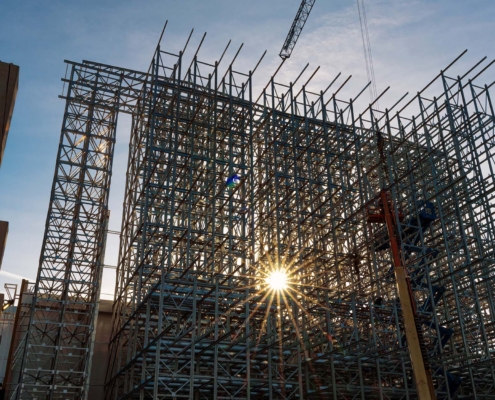
Scaffolding Being Erected

Rack Supported Building Explained: How ASRS Racking Can Replace a Standard Warehouse

ASRS

Categories

  • ASRS
  • Design
  • Pallet Racking
  • Storage Systems
Storx Solutions Final Safety Orange On Black

About Us

StorX delivers turnkey storage and automation solutions by managing design, integration, and installation as one coordinated system.

What We Do

Storage Systems

Automated Systems

Industries

Locations

Storage System Services

Contact Us

7380 Spout Springs Rd
Flowery Branch, GA 30542

(678) 336-8444

[email protected]

Website by Abstrakt Marketing Group ©
  • Privacy Policy
  • Sitemap
Scroll to top Scroll to top Scroll to top

This site uses cookies. By continuing to browse the site, you are agreeing to our use of cookies.

AcceptLearn more

Cookie and Privacy Settings


How we use cookies

We may request cookies to be set on your device. We use cookies to let us know when you visit our websites, how you interact with us, to enrich your user experience, and to customize your relationship with our website.

Click on the different category headings to find out more. You can also change some of your preferences. Note that blocking some types of cookies may impact your experience on our websites and the services we are able to offer.

Essential Website Cookies

These cookies are strictly necessary to provide you with services available through our website and to use some of its features.

Because these cookies are strictly necessary to deliver the website, refusing them will have impact how our site functions. You always can block or delete cookies by changing your browser settings and force blocking all cookies on this website. But this will always prompt you to accept/refuse cookies when revisiting our site.

We fully respect if you want to refuse cookies but to avoid asking you again and again kindly allow us to store a cookie for that. You are free to opt out any time or opt in for other cookies to get a better experience. If you refuse cookies we will remove all set cookies in our domain.

We provide you with a list of stored cookies on your computer in our domain so you can check what we stored. Due to security reasons we are not able to show or modify cookies from other domains. You can check these in your browser security settings.

Other external services

We also use different external services like Google Webfonts, Google Maps, and external Video providers. Since these providers may collect personal data like your IP address we allow you to block them here. Please be aware that this might heavily reduce the functionality and appearance of our site. Changes will take effect once you reload the page.

Google Webfont Settings:

Google Map Settings:

Google reCaptcha Settings:

Vimeo and Youtube video embeds:

Accept settingsHide notification only