3PL Warehouse Storage Solutions: How to Build Flexible Racking
The right 3PL warehouse storage solutions do more than fit your current clients. They’re designed to absorb the next contract change without a costly reconfiguration.
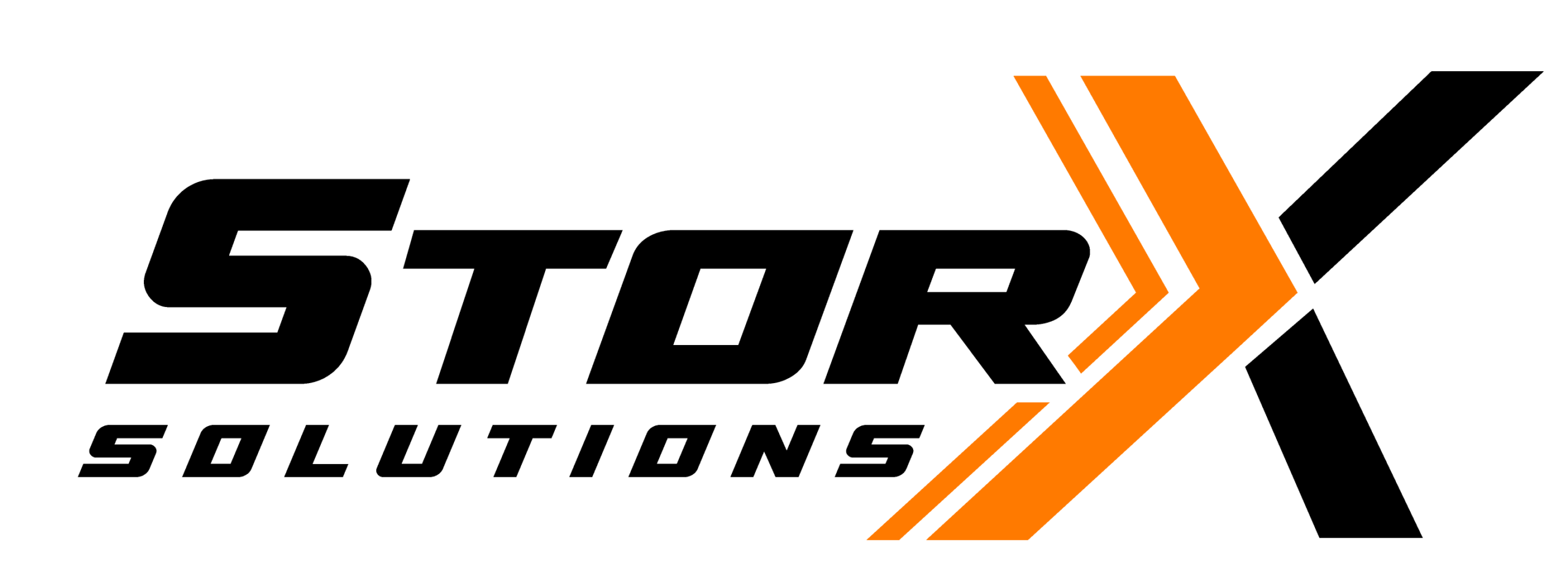
Managing 3PL warehouse storage solutions across mixed client profiles means your layout has to flex when a client churns, a contract doubles in volume, or a new account brings compliance requirements your current zones can’t support. That pressure shows up in your margins every time you reconfigure a zone built for a client who’s no longer there.
Before you can build a system that handles volatility, you need to understand exactly where it comes from.
Standard warehouse design assumes a relatively stable inventory profile. 3PL warehouse design doesn’t get that luxury. The volatility built into the 3PL business model is the variable every layout decision has to account for, and it shows up in three consistent ways.
No two clients store the same way. One account runs a high SKU count with mixed velocity that needs direct pallet access. The next runs a small SKU count with fast turns that could justify a density-first layout. The one after that brings seasonal spikes that double volume for six weeks and then disappear. Warehouse storage systems built around any one of those profiles create friction for the other two, and most 3PL operations manage all three at the same time.
When a contract ends, the layout configured for that client doesn’t leave with them. You’re left with infrastructure sized for a footprint, velocity profile, or compliance requirement that no longer matches what’s on your floor. The cost of that mismatch is reconfiguration downtime, labor inefficiency, and in some cases, capital expense that wasn’t in the budget when the original contract was signed.
Food and beverage accounts bring sanitation requirements. Some clients need cold storage compatibility. E-commerce fulfillment contracts carry labeling, packaging, and accuracy standards that don’t apply to the bulk pallet account three zones over. Managing those requirements in a shared building means your layout, your systems, and your data infrastructure all need to support segregation and compliance without duplicating cost across every account.
Understanding what creates volatility is the foundation. Matching your storage strategy to it is how 3PLs protect their margins.
The right flexible warehouse racking strategy for a 3PL doesn’t pick one system for the whole floor. It matches the system to the account type, the contract duration, and the throughput profile, then designs each zone so it can be reconfigured when the client mix shifts. Client stability and SKU profile should drive every system decision before anything else.
Selective pallet racking is the right default for accounts where SKU count is high, velocity is mixed, or the contract duration doesn’t justify a density-first investment. It gives you direct access to every pallet position, supports reconfiguration as accounts change, and connects cleanly with automation when volume eventually justifies it. For a 3PL managing frequent client transitions, the flexibility it delivers pays for itself in avoided reconfiguration cost.
Best for: High SKU count, mixed velocity, accounts where access and adaptability outweigh density
Pushback racking works for mid-velocity accounts running LIFO inventory where date-coded rotation isn’t required. It recovers floor space without automation capital and cuts forklift travel in zones where throughput is predictable. Pallet flow fits FIFO-heavy accounts managing perishable goods or date-coded inventory, using gravity-fed lanes to reduce picker travel and support rotation compliance. Both pallet racking systems earn their investment on accounts with enough stability and volume to justify a zone configured around a specific throughput model.
Best for: Accounts with consistent SKU profiles, defined throughput cycles, and contracts that support the configuration investment
Carton flow shelving fits e-commerce fulfillment accounts with high order counts and piece pick requirements. Gravity-fed lanes present product at a consistent pick face and cut travel distance in dense pick modules. Shuttle systems make sense for accounts with stable, high-volume pallet storage needs where reducing forklift traffic and maximizing density will have a long enough runway to return the investment. Neither system belongs in a zone likely to be reconfigured within the next twelve months.
Best for: Carton flow for high-volume e-commerce pick operations; shuttle systems for dense, stable accounts where labor reduction ROI is clear
Phase planning determines whether the investments you make in individual zones hold their value over time.
Most 3PL storage layout decisions focus on current capacity. The ones that protect margin over time also account for what the floor needs to support two contract cycles from now. Zoning by client type, building power and data infrastructure ahead of automation needs, and designing slab capacity for future shuttle or ASRS integration are decisions that cost very little at design time and reduce reconfiguration expense significantly later. Most competitors skip this conversation entirely. That gap shows up when a new account forces a layout change you didn’t plan for.
Design a flexible layout built to protect your margins through every contract cycle with StorX.
Scalable warehouse automation in a 3PL environment carries a risk that doesn’t exist in single-operator warehouses: over-automation. A system sized for one large account’s throughput becomes a fixed cost the moment that contract ends. That’s the nuance most automation conversations skip, and it’s the one that matters most to your margin. The right 3PL automation systems strategy matches technology to the stability of the account it serves, not the peak volume it could theoretically handle.
Sortation systems and conveyor automation make the strongest case for e-commerce fulfillment accounts with high order volumes and mixed SKU profiles. They improve accuracy, reduce manual handling, and lower labor cost per order in environments where throughput consistency justifies the investment. They’re also more modular than fixed ASRS infrastructure, which means they can be reconfigured or redeployed when account requirements change. That modularity matters when no account is guaranteed to renew.
Warehouse integration services for 3PL environments involve complexity that single-operator facilities don’t face. Multi-client inventory segregation, WMS data flow across different account structures, and implementation sequencing in active facilities all require engineering coordination from the start of the design process. Treating system integration and implementation as a design-phase decision, not an afterthought, is what keeps your technology, your data, and your compliance posture aligned across every account you manage.
From flexible pallet racking and phased modular layouts to semi-automated shuttle systems and full 3PL automation systems integration, StorX designs 3PL warehouse storage solutions around your client mix, contract stability, and actual throughput profile. Connect with the StorX team today to evaluate your current layout and build a system that flexes with your operation.






Matt Parkerson is the President of StorX Solutions, a Flowery Branch, Georgia company that designs, supplies, and installs turnkey warehouse storage and automation systems. He focuses on material handling, systems integration, and warehouse optimization, helping distribution centers, 3PLs, and manufacturers get more capacity and efficiency out of their facilities.